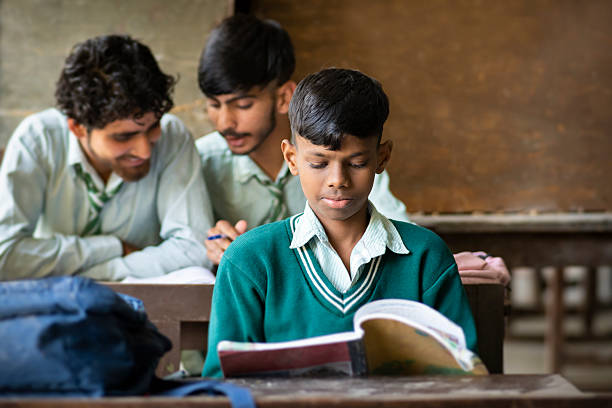

Man, if you told me ten years ago that kids would be learning math from a tablet while chilling in their bedroom instead of in a classroom, I probably would’ve laughed. Yet, here we are. Traditional education — you know, the one with desks in rows, chalkboards, and teachers writing in barely legible handwriting — is going through some kind of identity crisis. It’s not dying, but it’s definitely changing faster than most of us can keep up with. And honestly, it’s kind of exciting… and confusing at the same time.
Technology is basically the new principal
Honestly, tech is running the show now. From online classrooms to AI tutors, education is not what it used to be. Remember when we used to fight over who got the best seat in class? Now, kids fight over whose Wi-Fi is faster. Zoom fatigue, Google Classroom submissions, interactive apps — it’s a lot, but it also makes learning more flexible. Some teachers even joke online that they spend half the time fixing tech problems and the other half trying to teach. Social media is full of memes about students turning their cameras off and attending class from bed. I mean, that’s peak 2020s education right there.
Personalized learning is the real game changer
One of the coolest things I’ve noticed is how education is becoming personal. Back in my school days, we all had the same syllabus, same speed, same boring tests. Now platforms can actually adapt to the pace of the learner. If a kid struggles with algebra but nails history, the system can focus more on algebra. It’s like having a tutor who never gets tired or annoyed, except sometimes it’s just an algorithm telling you to “try again.” Weirdly, kids seem to like it. Even TikTok teachers are jumping on this trend, sharing shortcuts and hacks for learning that your textbook would never dare to mention.
Skill over grades — finally!
Another thing shaking up traditional education is the shift from grades to skills. Colleges and employers are starting to care less about whether you aced every test and more about what you can actually do. Coding bootcamps, online certifications, micro-degrees — they’re becoming legit paths. I’ve seen debates online where people argue if a kid with a high GPA but no real-world skills is actually ready for a job. Spoiler: a lot of employers side with the skillset crowd. Honestly, I think it’s a relief because memorizing facts I never use in real life always felt pointless.
Global classrooms are a thing now
It’s kind of wild, but your classmates can literally be from anywhere on the planet. No more just being stuck with kids from your neighborhood. I’ve chatted with students who have classmates in five different countries in one online seminar. Sure, time zones are a nightmare and sometimes someone’s cat walks across the keyboard, but it’s also broadening perspectives in ways traditional classrooms never could. People complain about “the good old days,” but I’d argue this is the good new days.
The rise of self-directed learning
The Internet has basically turned everyone into a potential student or teacher. YouTube tutorials, Reddit forums, online communities — kids and adults alike are learning outside the school system more than ever. I learned how to fix my laptop from a random forum post and honestly, that’s way more valuable than some textbook theory about computer architecture I barely understood. Online platforms give instant feedback, peer reviews, and you can pace yourself. Traditional schools didn’t really let you do that.
Mental health is finally on the radar
Another subtle but big shift is the focus on well-being. Old-school education often pushed kids to just survive tests, cram, and endure pressure. Now schools are talking mindfulness, emotional learning, and mental health support. Social media buzz is full of students sharing burnout stories, and honestly, it’s about time these issues got mainstream attention. I mean, no one learned better math while crying over a test, right?
But nothing is perfect… yet
Of course, not all change is smooth. Some teachers struggle with tech, some kids don’t have access to devices, and let’s not even get started on online distractions. There are still debates about whether screen-based learning can really replace human interaction, or if social skills are being left behind. Personally, I think it’s about balance — mixing the old and new. We don’t need to erase classrooms completely, but we definitely can’t pretend that the old ways alone are enough anymore.
The future looks flexible
If I had to guess, I’d say the next ten years will be about flexibility. Hybrid classes, AI tutors, gamified learning, international collaborations — education is becoming less rigid and more about what actually helps students grow. And maybe, just maybe, we’ll finally have a system where learning isn’t a chore but something people actually enjoy. The memes online suggest we’re not there yet, but hey, progress is progress.
So yeah, traditional education is changing fast because the world around it is changing faster. Tech, social expectations, global perspectives, mental health awareness — it’s all colliding and forcing schools to rethink how we learn. And honestly, I’m kind of glad it’s happening.