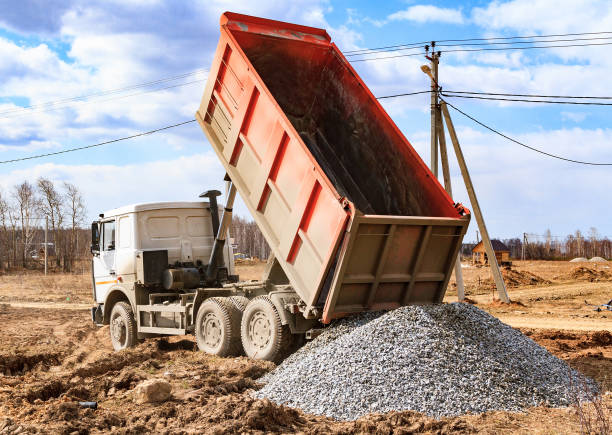

Rainwater causes trouble when it settles beside a foundation, cuts channels through a yard, or leaves soft ground near walkways and driveways. Rock and soil materials can reshape how that water moves by creating stable slopes, open drainage paths, and stronger surfaces. Proper placement matters because each material controls runoff in a different way.
Gravel Gives Water a Clearer Path Underground
Clean gravel creates open spaces that allow water to pass through instead of remaining trapped in dense soil. French drains, foundation drains, and yard drainage trenches often rely on washed stone placed around perforated pipe.
Fine sediment can slowly clog those open spaces, so drainage aggregate should contain little dust, sand, or clay. Homeowners searching for gravel delivery near me should ask whether the available material is washed and screened for water-control work rather than intended for compacted road bases.
Fill Dirt Corrects Low Areas That Hold Water
Shallow depressions often collect rain because the yard lacks enough elevation to direct runoff elsewhere. Suitable fill dirt can raise those low sections and establish a gradual slope toward a swale, drain, ditch, or safe discharge area.
Organic topsoil should not form the deeper part of the repair because roots and plant matter break down over time. Compacted fill provides a firmer base, while a thinner layer of topsoil can support grass once the grade has been corrected.
Stone Beds Reduce Mud Near Downspout Outlets
Roof runoff can strike one small patch of ground with enough force to wash away soil and create a muddy basin. A stone splash area slows that concentrated flow and spreads it across a wider surface. Larger rock usually stays in place better than fine gravel where water exits quickly. Downspout extensions should still carry runoff away from the foundation, since decorative stone alone cannot solve poor discharge placement.
French Drains Depend on the Right Gravel
Perforated pipe collects water only when surrounding material allows moisture to reach its openings. Three-quarter-inch washed gravel commonly works well because it leaves drainage space while supporting the pipe evenly.
Crusher run should remain outside the main drainage zone because its smaller particles pack tightly and restrict flow. Buyers comparing gravel for sale should separate washed drainage stone from dense-grade aggregate, even when both products look suitable at first glance.
Rock Protects Slopes from Erosion
Fast-moving runoff can strip exposed soil from banks, drainage channels, and the edges of sloped yards. Medium or large stone breaks up the current and shields the surface beneath it. Riprap may suit stronger flows near culverts or steep channels, while smaller rock can handle lighter residential runoff. Contractors reviewing rock and dirt for sale should match stone weight to water speed, since undersized pieces may wash downstream during heavy storms.
Proper Grading Moves Water Away from Foundations
Positive grading gives rainfall a clear direction before it reaches the foundation wall. Fill material placed near the home should create a steady outward slope without covering siding, vents, brick weep holes, or waterproofing details. Settlement can gradually flatten that slope, especially where backfill was placed too quickly after construction. Periodic inspection helps property owners spot dips before roof runoff and surface water begin collecting beside the structure.
Gravel Stabilizes Wet Driveway Edges
Soft driveway shoulders often trap water and break down under turning tires. Crushed angular gravel can strengthen those edges while preserving a route for moisture to leave the travel surface.
Rounded stone moves more easily under vehicle pressure and may spread into nearby grass. Customers arranging gravel delivery in Huntsville AL should describe traffic levels, soil conditions, and drainage concerns so the selected aggregate supports both stability and runoff control.
Dry Creek Beds Manage Runoff Naturally
A dry creek bed creates a defined channel for stormwater while adding a finished landscape feature. River rock, larger accent stones, and a prepared base guide water through the yard without leaving a raw dirt trench.
Landscape fabric may help separate stone from fine soil, although the channel still needs the correct slope and outlet. Poorly planned beds can move water toward neighboring property or create erosion where the channel ends.
Soil and Stone Layers Strengthen Drainage Swales
Swales use shallow contours to carry runoff slowly across a property. Compacted soil forms the shape, while stone may reinforce entry points, low sections, or outlets exposed to stronger flow.
Grass can stabilize broad swales with gentle movement, but shaded or frequently wet areas may need aggregate protection. Planned rock and dirt delivery allows crews to receive fill, topsoil, and erosion-control stone in the order required for grading and finishing.
Material Planning Prevents Incomplete Drainage Repairs
Accurate measurements help determine how much fill, gravel, or larger rock a drainage project will require. Trench depth, slope length, low-area volume, pipe size, and expected compaction all affect the final order. Serving homeowners, landscapers, and contractors across the Huntsville area, North Alabama Rock & Dirt provides gravel, crushed stone, fill dirt, topsoil, and other materials for drainage, grading, landscaping, driveway, and construction work. Its rock and dirt delivery service supports projects ranging from small yard corrections to larger water-management improvements with material options and load sizes suited to the site.