
Southaven Is Growing Fast. Its Electrical Needs Are Growing With It.
Drive through any part of Southaven today and the growth is impossible to miss. New subdivisions along Getwell Road and Stateline Road, commercial development pushing further south along Highway 51, industrial expansion near the logistics corridors that have made DeSoto County one of the most economically active areas in Mississippi. This growth means new homes being wired, old homes being updated to handle modern loads, and businesses of every type and size requiring electrical work that keeps pace with their expansion.
In a growing market like Southaven, the quality of available electrical contractors varies considerably. Some have grown with the market, invested in training and equipment, and built strong local reputations. Others have surfaced to meet demand without the credentials or experience to back up their availability. Knowing how to tell the difference — before the work starts — is one of the most practical skills a Southaven property owner can develop.
What Response Speed Actually Looks Like
When Southaven homeowners and business owners search for an electrician Southaven MS can trust, they are usually looking for two things simultaneously: someone who can show up without a three-week wait and someone who will actually fix the problem correctly once they are there. These two qualities are not mutually exclusive, but they require something specific from a contractor — a well-staffed, well-organized operation that can handle demand without sacrificing quality.
Fast response means answering the phone when it rings, providing a realistic estimate of when someone can be on-site, and showing up when promised. It does not mean rushing through a diagnosis or a repair. A technician who is physically fast but cuts diagnostic steps to save time is not providing fast service — they are providing incomplete service that will require a callback when the original problem persists.
Era-Specific Electrical Issues in Southaven Homes
Southaven’s housing stock spans several decades, and each era has its own characteristic electrical patterns. Homes built in the 1960s and early 1970s sometimes contain aluminum branch circuit wiring — a cost-saving substitution for copper that was used briefly during a period of high copper prices. Aluminum wiring is not inherently dangerous when properly maintained, but it requires specific attention at connection points where oxidation can cause increased resistance and heat over time.
Homes from the 1980s and early 1990s typically have copper wiring in good condition but panels that were sized for household electrical loads that look nothing like what families use today. A 100-amp or even a 150-amp panel feeding a 2,500-square-foot home with an EV charger, a home office, and a full complement of modern appliances is working harder than it was designed to work. Recognizing when a panel upgrade moves from “eventually” to “now” requires an electrician who can read the actual load data rather than just eyeballing the situation.
Storm Season Realities in North Mississippi
Southaven sits in a region that takes its weather seriously. Severe thunderstorm season brings lightning strikes that can induce damaging voltage spikes across miles of utility lines. Ice storms in January and February can bring trees down on service entrances. Tornado watches are a regular part of spring life in DeSoto County. All of this weather creates electrical concerns that homeowners further north or on the coasts do not deal with in the same way.
Whole-house surge protection — installed at the main panel, not just at individual power strip level — is genuinely important in this region. A direct lightning strike or a nearby utility line fault can generate voltage spikes that destroy appliances, HVAC equipment, and electronics in seconds. Panel-level surge protection does not prevent all surge damage in extreme events, but it dramatically reduces the number and severity of casualties in a typical severe weather scenario. Every Southaven home should have it.
What Honest Electrical Diagnosis Looks Like
One of the most common complaints homeowners have about contractors in any trade is feeling like the person was looking for the most expensive problem rather than the actual problem. In electrical work, this pressure is real — a contractor with high overhead and thin margins has incentive to recommend more work than is strictly necessary. Protecting yourself against this requires some basic understanding of what a proper diagnostic process looks like.
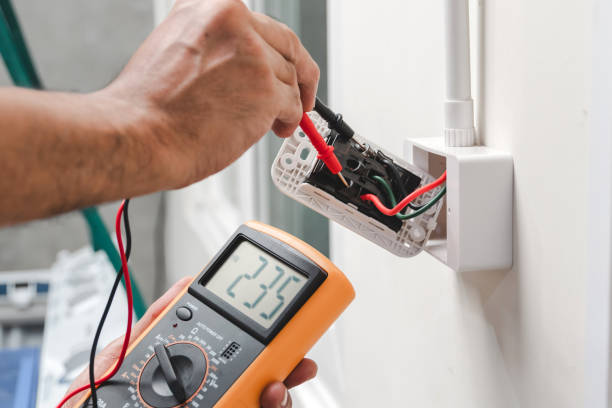
A legitimate electrical diagnosis involves systematic testing with appropriate instruments — a multimeter for voltage and continuity tests, a clamp meter for current measurement, sometimes a thermal camera for identifying hot spots at connections. It involves tracing a problem back to its root cause rather than simply replacing the most visible component. And it involves explaining the finding in plain terms that allow the homeowner to understand what is wrong and make an informed decision about the repair.
Building a Reliable Electrician Relationship Before You Need It Urgently
The worst time to find a new electrician is when you have an emergency at 9 PM on a weeknight. The best time is now, when you can take a few days to research options, check credentials, and maybe start with a smaller non-urgent project that lets you evaluate the contractor’s work quality and communication before trusting them with something critical.
Southaven homeowners who have an established relationship with a licensed electrician they trust are in a significantly better position when something goes wrong. They know who to call. They know the contractor is licensed and insured. They have some sense of what fair pricing looks like from prior experience. And they are more likely to get priority scheduling when they are competing for service during a busy period. Finding your electrician before you need one urgently is one of the simplest and most underrated home management strategies available.